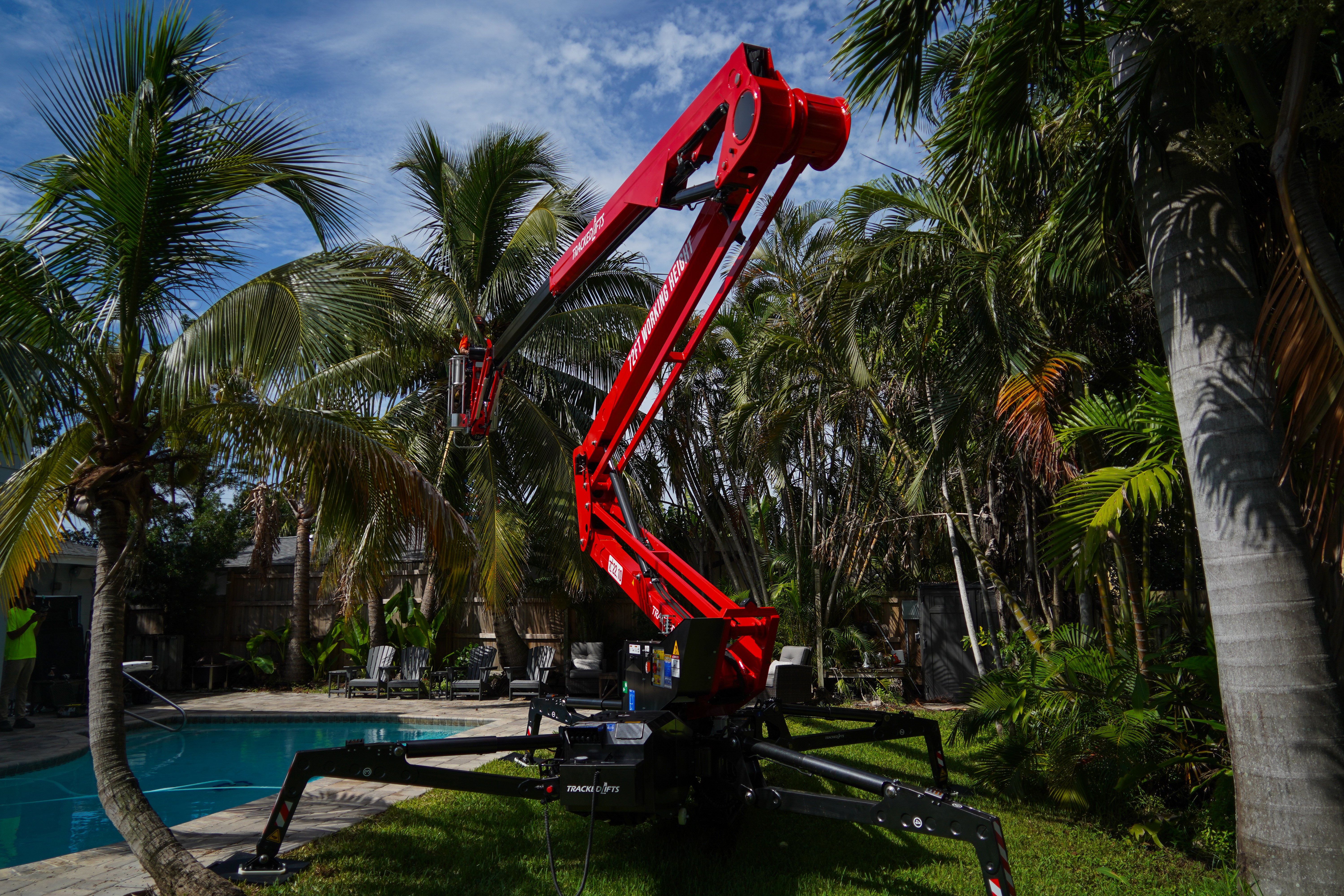
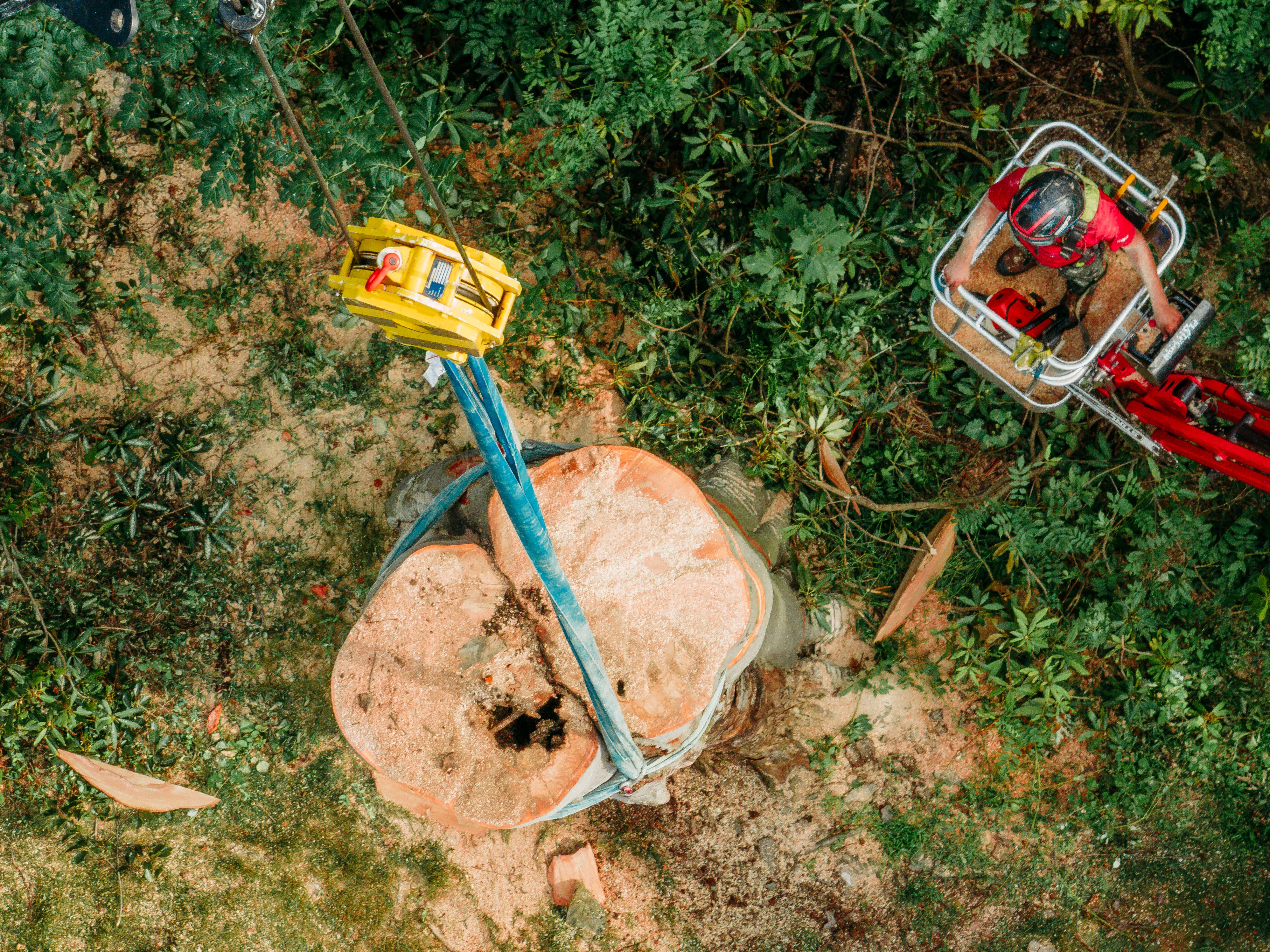
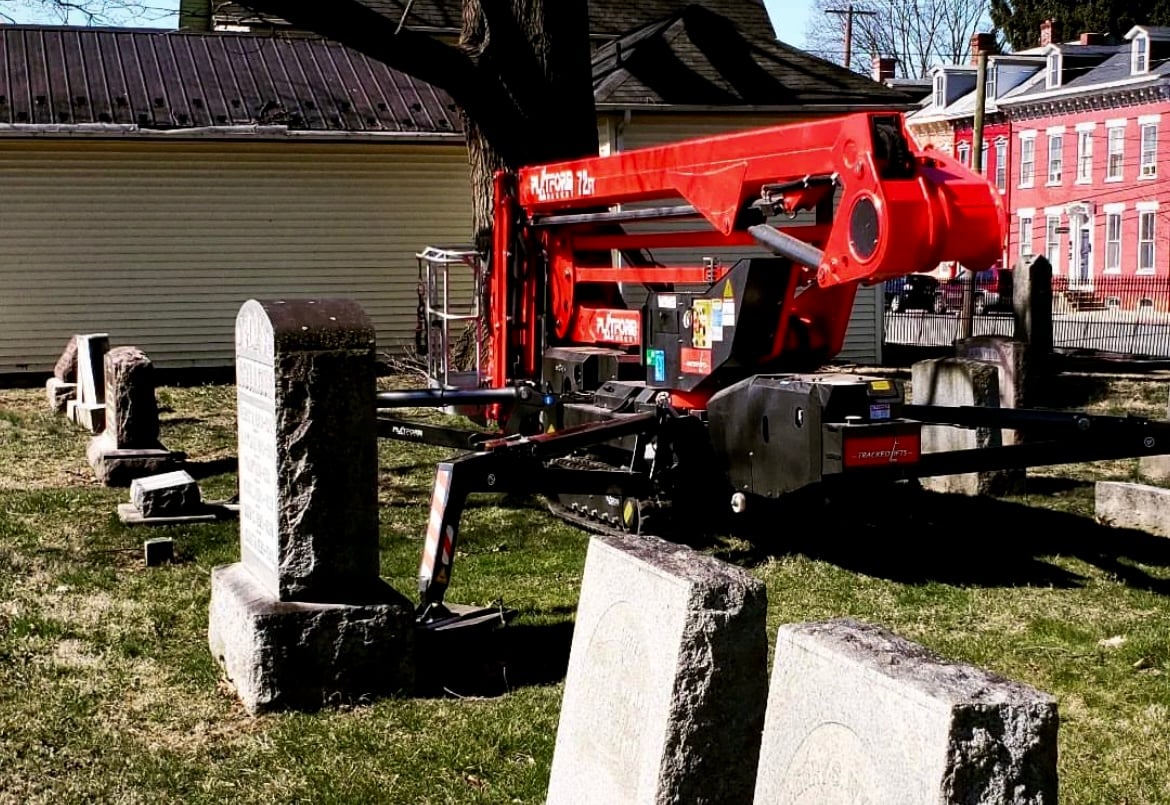
One of the most common questions we get from arborists considering their first tracked lift is some version of: What am I really signing up for? The purchase price is not top of mind, but rather, the weekly and monthly reality of keeping the machine running well. It's a fair question, and the answer is more straightforward than the equipment looks.
Owning an arborist lift is not complicated, but it is a real commitment. The good news is that the maintenance schedule for an arborist tracked lift is short, predictable, and almost entirely preventable. If you know what a standard year looks like before you buy, you can plan around it rather than react to it.
Here is what to expect from a full year of ownership, broken down by how often each actual task comes up.
The Big Picture: Owning an Arborist Lift Is Simpler Than You'd Think
From an aerial lift maintenance perspective, a Tracked Lifts machine has five rhythms to plan for:
- Daily pre-operation inspections before the lift leaves the shop or the trailer
- Monthly (every 30 days) lubrication of the boom and pivot points
- Engine and hydraulic service every 250 hours of run time
- A larger service that includes a full hydraulic fluid change every 500 hours
- An ANSI annual inspection every 13 months
That's it. There is no special tooling, no proprietary fluids you need to source from overseas, and no week-long teardown buried in the calendar. Most of the work is either done at the shop in the morning or scheduled around your slow weeks.
Daily: The Five-Minute Pre-Flight That Saves Your Season
Daily pre-op inspections are the single most valuable habit you'll build as an owner. Five minutes in the morning catches problems that would otherwise cost you a day, a job, or a customer.
Every Tracked Lifts machine ships with a model-specific pre-flight checklist (the TL 22.10's, for example, runs through the engine, chassis, turret, boom, jib, and basket in this order). The structure is the same across the lineup, so once your operators learn it on one machine, the muscle memory transfers.
What to look for before the lift leaves the shop:
- Power Plant: oil level, coolant, fuel, battery charge, and a quick visual on hoses and cables
- Chassis and Outriggers: track condition, undercarriage debris, hydraulic level, high-pressure filter check
- Turret and Lower Boom: hydraulic bypasses disengaged, ground panel functional, beacon light working
- Upper Boom and Telescope: wear pad condition, and hose and cable inspection
- Jib and Basket: free of debris, basket lock engaged, remote and emergency stop tested
Then the engine starts the sequence: battery master switch is on, key selector to ground, beacon checks, glow plug, and start. Once the engine is running, level the basket, raise the outriggers, do a quick leak check, and confirm that the remote responds. If anything is off, this is the moment to catch it, not at 60 feet over a customer's roofline.
The post-flight walkaround at the end of the day is the bookend. Anything that came up during the shift should be noted and reported before the lift goes back out. Damages must be repaired before the next use. That is non-negotiable, and it's the reason small problems stay small.
Monthly (Every 30 Days): Lubrication and Cleaning
Every 30 days, every grease point gets hit. The boom knuckles, rotation gear, outrigger pivots, and pin-and-bushing locations across the machine all use No. 2 Lithium grease (ISO VG 220). One grease across all your Tracked Lifts standard points keeps the supply closet simple.
There is no separate lube map or different lubricant for different points. The user manual is your reference for locations, but the routine itself is the same on every machine: Hit every fitting, wipe the excess, and move on.
This is also the perfect time to perform a deeper clean than the daily wipe-down. Tree work generates an extraordinary pile of debris, and the places it collects most are predictable: the back of the boom, the basket floor, the outrigger locking pins, and the turret. Clear out those areas monthly, and you'll cut down on premature wear and the kind of buildup that hides developing issues. Washing your lift isn’t a difficult process, it follows the same way you would wash your car at home.
Every 250 Engine Hours: The First Real Service Milestone
Depending on how much you run the lift, a 250-hour service is needed yearly for moderate users and as often as every couple of months for crews running daily through peak season.
What gets replaced at 250 hours
- Engine oil and engine oil filter
- Fuel filter
- Air filter
- High-pressure hydraulic filters
- Return filter
- Hydraulic breather filter
On Tracked Lifts diesel engines, that means 15W40 engine oil. On Honda gas-equipped models, it's 10W30. Hydraulic systems run AW-46 on standard non-dielectric machines, and ISO-46 Bio on the 22.10 46kV insulated unit. (OMME models use ISO-22 Bio.) Coolant on diesel-equipped lifts is 50/50 red coolant.
It is straightforward work. A competent shop tech or a confident owner-operator can complete the 250-hour service in a day without specialty equipment.
Every 500 Engine Hours: The Bigger Service
The 500-hour service is identical to the 250-hour service, but with one important addition. The full hydraulic fluid gets dumped and replaced. It extends the life of every cylinder, valve, and pump in the machine, and it's the single most important interval for protecting the heart of an arborist tracked lift.
If you're going to outsource one piece of arborist lift maintenance, this is a reasonable one to schedule with a certified service center, especially if you don't have a clean way to capture and dispose of used hydraulic fluid. Our service network can handle it directly or coordinate with one of our 122-plus certified service partners near you.
Every 13 Months: Your ANSI Annual Inspection
The ANSI Annual Machine Inspection (AMI) comes due every 13 months. In most regions, it's required for insurance compliance, and it's worth doing regardless. A qualified technician inspects the structural integrity of the boom welds, the outrigger assemblies, the load-sensing and tilt-sensor calibration, and the wear pads within the telescoping boom sections.
Wear pads are the small thing that matters. As they thin out, the boom develops chatter on extension. Caught early, it's a shim. Caught late, it's a longer fix. Annual inspections are designed to surface that kind of issue before it becomes a bigger one.
This is also when a tech can flag anything trending in the wrong direction, so you can plan repairs around your slow season instead of in mid-July.
A Standard Year, Visualized
Here is what arborist lift maintenance looks like across a typical 12-month period for a moderately busy crew.
|
Cadence |
Task |
What's involved |
Typical time commitment |
|---|---|---|---|
|
Daily |
Pre-flight and post-flight inspection |
Visual checks across engine, chassis, boom, jib, basket. Engine start and function test. |
5 to 10 minutes per shift |
|
Every 30 days |
Lubrication and deep cleaning |
Grease all pivot and pin points. Clear debris from boom back, basket, outrigger pins, and turret. |
30 to 60 minutes |
|
Every 250 engine hours |
Engine and hydraulic service |
Replace engine oil, oil filter, fuel filter, air filter, high-pressure hydraulic filters, return filter, breather filter. |
Half a day in the shop |
|
Every 500 engine hours |
Full hydraulic service |
Everything in the 250-hour service, plus drain and refill the hydraulic fluid. |
Full day in-shop |
|
Every 13 months |
ANSI annual inspection |
Qualified tech inspects welds, outriggers, sensors, load systems, and adjusts wear pads. |
Half a day with a certified service tech |
None of the lift maintenance is heroic. It's a small set of habits and a couple of scheduled service days a year. The owners who treat it as a rhythm get more uptime and a higher resale value down the line. The ones who consider it optional often pay for it later, usually at the worst possible moment.
What Most Owners Forget to Clean
If we had to pick the single biggest source of preventable wear we see in the field, it's debris. Specifically, debris in the four spots that fill up over time and seldom get cleaned in the daily wipe-down:
- The back of the boom, where dust and bark dust pack into the joints and around the wear pads
- The basket floor, especially under the controls and around the basket lock
- The outrigger locking pins, where grit can prevent a clean lock-in and trigger sensor errors
- The turret, where it gathers around the rotation gear, slowly contaminates the grease you applied last month
Add those four points to your monthly lift wash down, and you'll head off a meaningful percentage of the service calls we get that start as “a sensor error” and turn out to be debris.
Why Arborist Tracked Lift Maintenance Is Different from a Slab Lift
If you've owned a slab scissor or a standard boom lift, you'll find an arborist tracked lift sits in a slightly different category. The undercarriage is more complex, the hydraulic system is denser (because the outriggers, tracks, and boom all rely on it), and there are more grease points than you're used to.
The trade-off is what makes the lift do its job. The tracked chassis is what gets you onto soft ground without shredding a lawn. The outrigger system is what holds you steady on a slope. The hydraulic density is what keeps the boom moving smoothly under load. None of that is free, but the maintenance that comes with it is well within reach of any operator willing to follow a checklist.
Tracked Lifts machines were built for the working environment in which they live: the armor, the protected routing, and the heavier steel. All of it is designed to take the kind of abuse that bends and breaks atrium-derived lifts. The maintenance schedule reflects that. It's straightforward, predictable, and short.
FAQs
How many hours of maintenance should I plan for in a typical year?
For a moderate-use operation, plan on roughly 30 to 50 hours of total maintenance time across daily checks, monthly lubrication, two engine services, and the ANSI annual inspection. Heavy users running daily during peak season will see 250-hour intervals occur multiple times a year.
Do I need a special technician for arborist lift maintenance?
Daily, monthly, and 250-hour services can be handled by a competent shop tech or a confident owner-operator. The 500-hour service and the ANSI annual inspection are best handled at a certified service center. Tracked Lifts has 122-plus certified third-party service partners across the country, plus field techs who can come to you.
What happens if I miss an ANSI inspection?
Both insurance and regulatory compliance depend on a current inspection. Missing one creates exposure on the liability side, and it usually means the next inspection finds more (and more expensive) issues than it would have caught earlier. The inspection runs every 13 months for a reason.
Are there any lubricants I shouldn't substitute?
Use the lubricants and fluids called out in the operator manual: No. 2 Lithium grease (ISO VG 220) for standard grease points, the correct hydraulic fluid grade for your model (AW-46 for non-dielectric machines, ISO-46 Bio for the 22.10 46kV unit, ISO-22 Bio for OMME models), 15W40 engine oil for diesels, 10W30 for Honda gas engines, 80W90 gear oil, and 50/50 red coolant on diesel-equipped lifts. Generic substitutions that look similar on the bottle aren't always the same inside the machine.
Where can I find the lube map for my Tracked Lift?
There is no stand-alone lube map. The user manual for your specific model walks through every grease point and is the definitive reference. Once you've gone through a 30-day lubrication cycle a few times, the routine becomes familiar.
My lift looks like it has a “Do Not Wash” sticker. How do I do my monthly cleaning?
All Tracked Lifts arrive with a hose sticker that is easy to mistake as “do not wash.” However, it states “do not add water to an electrical fire,” so you can wash your lift without worry, just like you would wash your car at home.
Ready to Make Ownership Easy?
A well-built lift and a predictable maintenance routine are what separate the crews running the most uptime from the crews living from service call to service call. We've spent years tuning both halves of that equation, and we'll happily walk you through what your actual year of ownership would look like on the model that fits your work.
If you're sizing up your first arborist tracked lift, want a maintenance plan designed around your hour intervals, or just want to talk to someone who has done this for a while, get in touch with our team. We’ll help you map out the right model and maintenance plan for your operation.