If you run a tree service or work as an arborist, you have probably heard more and more crews talking about spider lifts recently. Maybe you have seen one on a jobsite, folded up on a trailer, or watched a video of one navigating a narrow backyard gate. But what exactly is a spider lift, and why are so many tree care professionals adding them to their fleets? Why are they becoming a go-to tool for modern arborists?
What Is a Spider Lift?
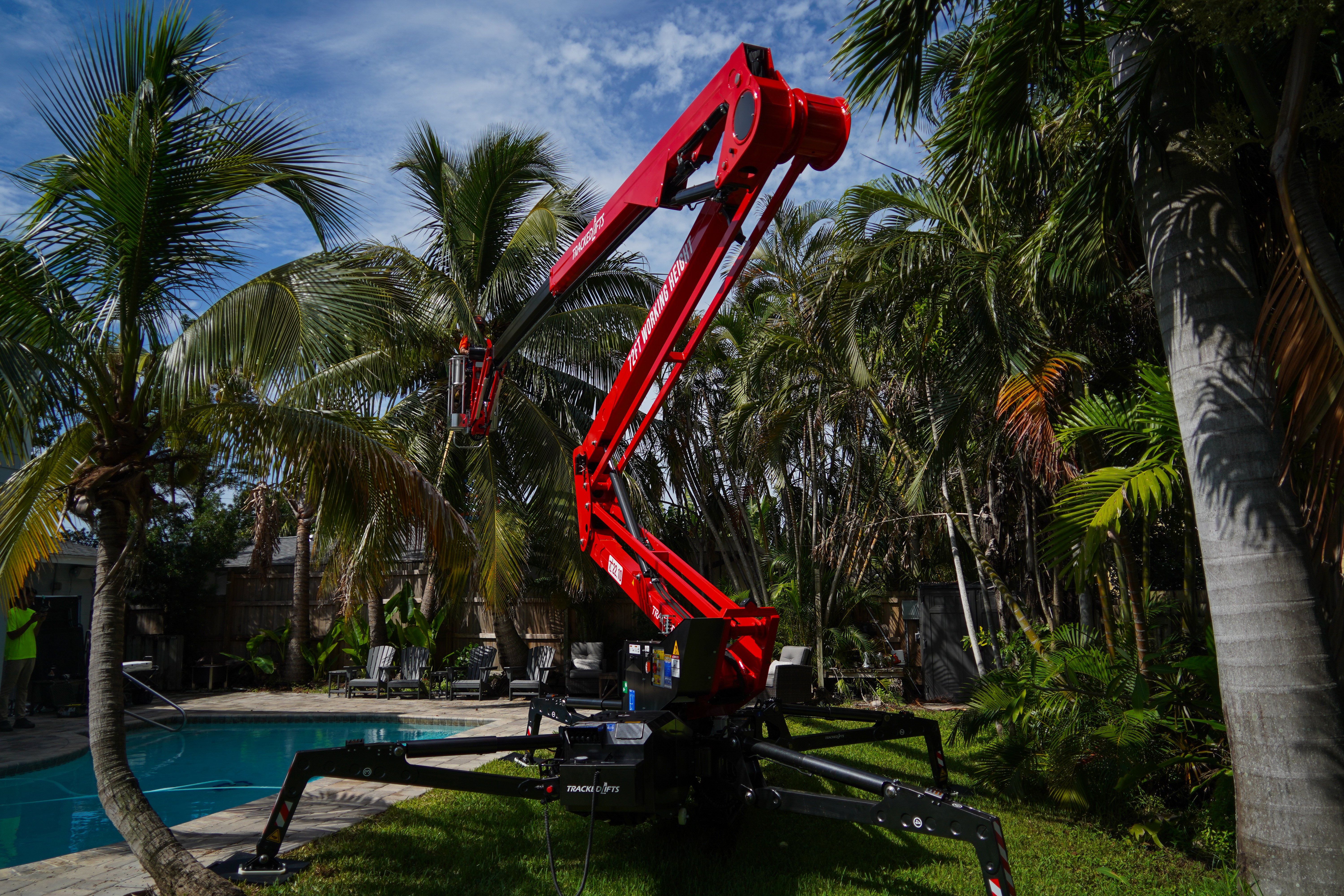
A spider lift is a compact, track-driven aerial work platform with a boom arm and extendable outrigger legs. The name comes from those outriggers. When deployed, they extend outward from the base of the machine like the legs of a spider, providing stability on slopes, soft ground, and uneven terrain.
Spider lifts are sometimes called tracked aerial lifts, compact tracked lifts, or tracked spider lifts. Regardless of the name, the concept is the same: a self-propelled machine that can travel across rough ground on rubber tracks, set up on its outrigger stabilizers, and lift an operator in a work basket to reach elevated areas.
Working heights vary by model. Compact units start around 44 feet, whereas larger models can reach 90 feet or more. Outreach, which is the horizontal distance the boom can extend from the base, typically ranges from around 30 feet to 50 feet, depending on the machine.
How Does a Spider Lift Work?
At a basic level, a spider lift works in three stages:
- Travel: The tracked chassis moves the machine across the jobsite. Rubber tracks distribute weight over a large surface area, reducing ground pressure and protecting lawns, turf, and sensitive surfaces. Most spider lifts can typically handle slopes up to 30%.
- Setup: Once positioned, the outrigger legs extend and plant firmly on the ground. Many modern spider lifts feature automatic leveling systems that adjust the outriggers based on terrain, so the operator does not have to position them manually.
- Lift: The boom raises the work basket to the desired height. Boom articulation allows the operator to navigate up, over, and around obstacles such as fences, buildings, and neighboring trees to reach the specific area they need.
Power sources vary. Some spider lifts run on diesel or gas engines for outdoor work. Others offer electric, hybrid, or dual-power configurations for indoor or emission-sensitive environments. Understanding your aerial spider lift power options will help you choose the best fit for your work mix.
Key Features That Matter for Tree Work
Not every aerial platform is built for arboriculture. Tree work throws debris, happens on hillsides, and often involves squeezing through residential gates and between structures. Here are the spider lift features that make the biggest difference for tree service crews.
Tracked Chassis and Terrain Handling
Rubber tracks give spider lifts a significant advantage over wheeled equipment. They handle mud, gravel, slopes, and soft turf without sinking or tearing up the ground. For residential tree work where protecting the homeowner's lawn matters, low ground pressure is a real selling point.
Articulating Boom and Outreach
An articulating boom bends at one or more joints, allowing the operator to reach up and over obstacles rather than just straight up. It is especially useful for working around wide canopies, neighboring structures, or trees near power lines. Some models offer 50 feet of outreach, which means you can position the base well away from the drop zone and still reach the work area.
Outriggers and Self-Leveling
The outrigger legs are what give a spider lift its stability. When deployed, they create a wide, stable footprint on uneven ground. Whether adjusting manually or using auto-leveling features, you can adjust leg height to keep the platform level, which speeds up setup and reduces operator error. For tree work on hillsides or uneven yards, this feature is a major timesaver.
Compact Frame and Narrow Access
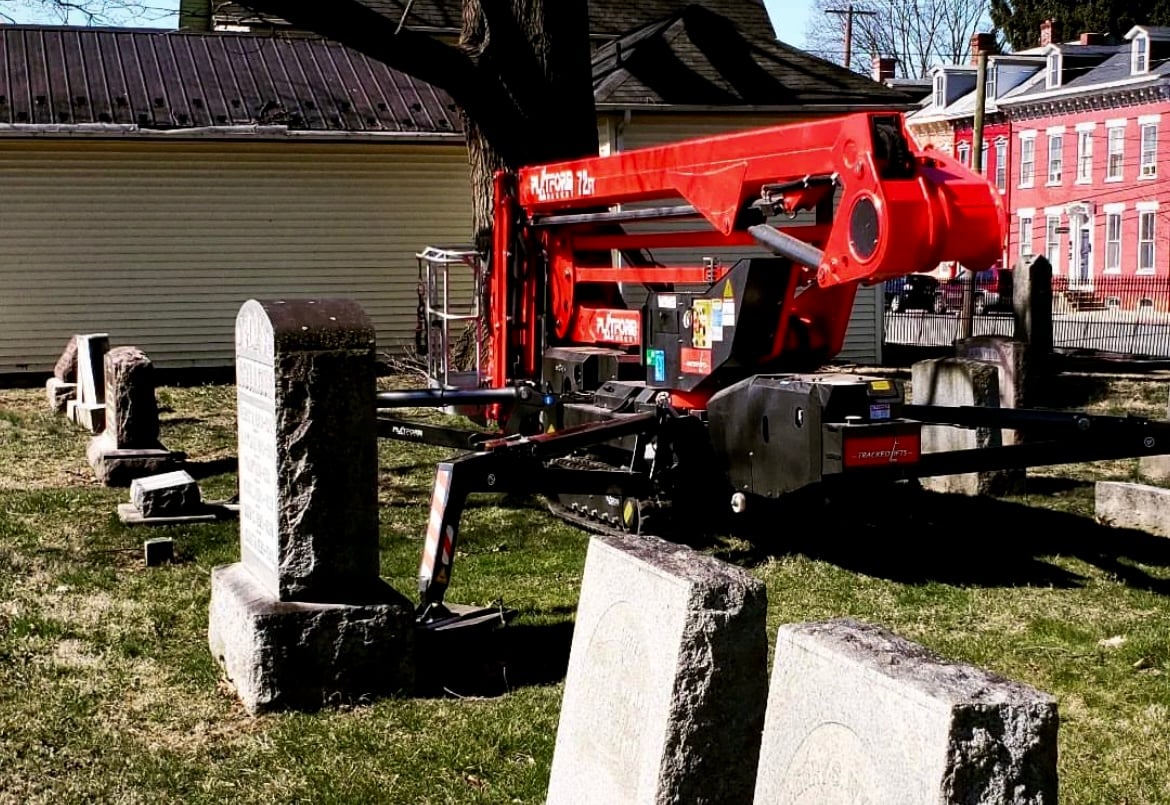
Many spider lifts fold down to less than 3 feet (36 inches) wide in transport mode. It means they can fit through standard residential gates, down sidewalks, and between structures that would stop a bucket truck in its tracks (or lack thereof). For urban and suburban tree work, this access advantage means taking on jobs that would otherwise require climbing or a crane.
Spider Lifts vs. Bucket Trucks and Other Aerial Lifts
Bucket trucks have been the standard aerial platform in tree care for decades. They work well for roadside jobs and open properties with solid ground access. But they come with limitations that spider lifts are specifically designed to overcome.
|
Factor |
Spider Lift |
Bucket Truck |
|
Access to more spaces |
Fits through gates, between structures |
Limited by vehicle width and turning radius |
|
Terrain handling |
Tracks handle slopes, mud, soft turf |
Requires firm, level ground for safe operation |
|
Lawn/turf impact |
Low ground pressure minimizes damage |
Heavy vehicle weight causes ruts and compaction |
|
Setup time |
Quick setup with auto-leveling outriggers |
Drive-and-deploy, but positioning can take time |
|
Working height range |
44–177 ft depending on model |
Typically 40–75 ft |
|
Transport |
Trailer-mounted, towable by most trucks |
Self-contained vehicle (CDL may be required) |
Spider lifts do not replace bucket trucks in every scenario. For high-volume roadside work on paved surfaces, a bucket truck is still efficient. But for residential jobs, backyard access, slopes, and soft ground, a spider lift handles conditions that would sideline a bucket truck entirely.
Common Spider Lift Uses in Arboriculture
Spider lifts are used across a wide range of tree care applications:
- Pruning and trimming: Position the basket precisely within the canopy for accurate cuts without damaging surrounding branches or structures.
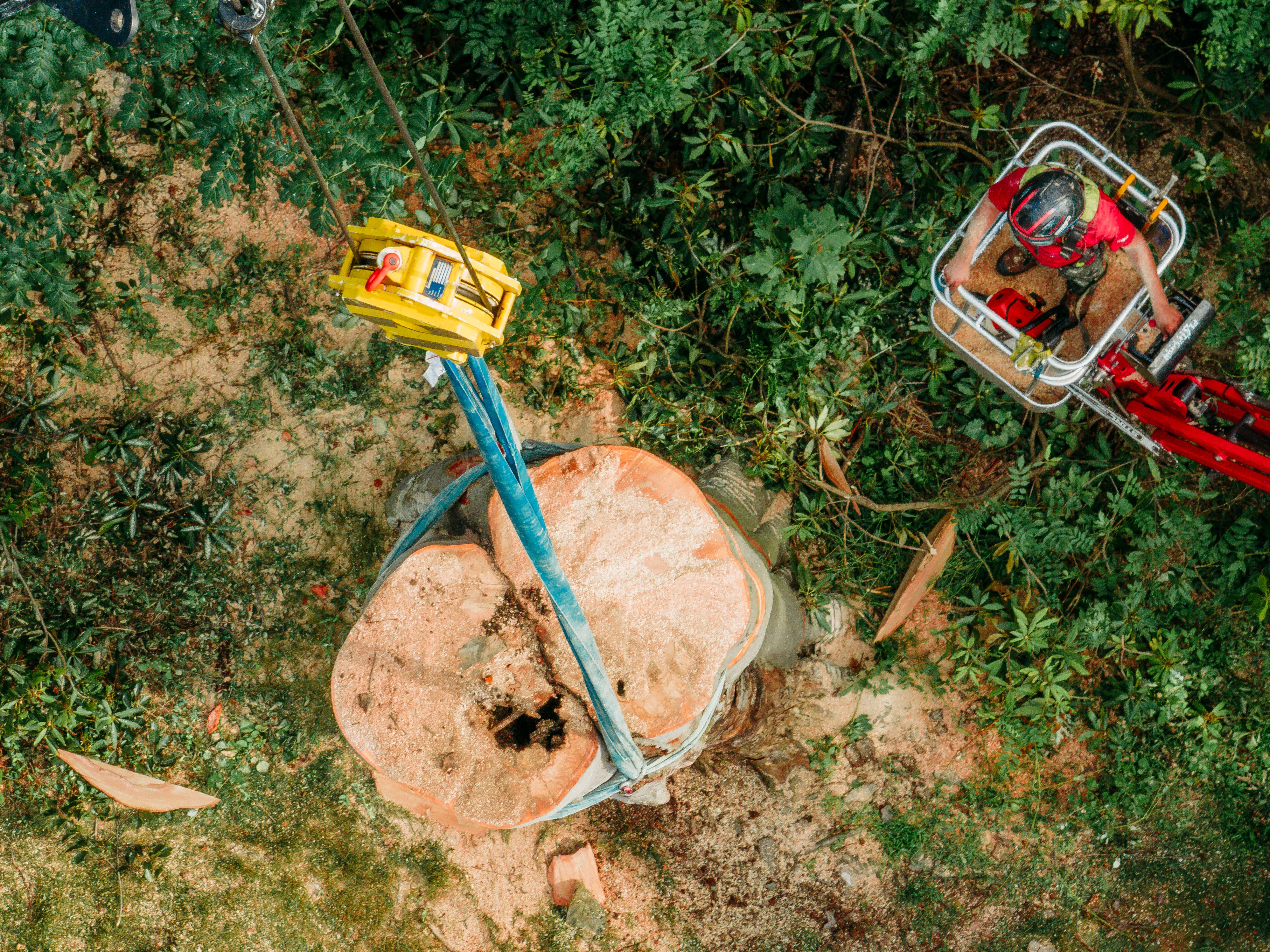
- Tree removal: Access dead, damaged, or hazardous trees that are too risky to climb. The stable platform allows the operator to work piece by piece from above.
- Storm damage response: After storms, trees can be unstable and unpredictable. A spider lift keeps the operator off the tree while still reaching the work area.
- Line clearance: Insulated spider lift models are available for work near power lines, providing both reach and electrical protection.
- Inspections and assessments: Arborists can get a close-up look at upper canopy health, pest damage, or structural issues without climbing.
Are Spider Lifts Hard to Operate?
Most operators get comfortable with a spider lift faster than you might expect. The controls are proportional and hydraulic, which means the boom moves smoothly in response to how far you push the joystick. There is no jerky, all-or-nothing movement.
Many models also include wireless radio remote controls, so you can position the machine from the ground before climbing into the basket. Auto-leveling and auto-stow functions further simplify setup and takedown.
If your crew is used to operating bucket trucks or other aerial platforms, the transition to a spider lift is straightforward. Most manufacturers and suppliers offer operator training as part of the purchase or rental process.
What to Look for When Choosing a Spider Lift for Tree Work
Not all spider lifts are created equal, and not all are designed with arboriculture in mind. Some were originally built for indoor construction (atrium lifts) and later adapted for outdoor use. Those adapted designs can have exposed hydraulic cylinders, unprotected gas tanks, and thinner steel that does not hold up under the demands of tree work.
When evaluating a spider lift for your operation, consider these factors:
- Working height and outreach: Match the lift to the tree sizes and job types your crew handles most. Compact models like the TL 13.80 tracked spider lift, mid-range options such as the Tracked Lifts 18.90, and taller arborist platforms like the 72-foot 22.10 Arborist lift or the 89-foot 27.14 Arborist spider lift have very different capabilities, so be sure to align specs with your most common work.
- Build quality and protection: Look for armored undercarriages, protected cylinders, and reinforced components designed to take debris hits.
- Stability at height: Ask about swing and sway. A lift that stops when you release the controls, rather than continuing to rock, makes a noticeable difference in operator confidence.
- Service and parts access: A lift is only as good as the support behind it. Ask about parts availability, service center coverage, and diagnostic capabilities before you buy.
- Power source: Diesel or gas is good for all-day outdoor work; electric or hybrid is desirable if you also work indoors or in emission-sensitive areas.
- Transport logistics: Will the lift fit on your current trailer? Does it require a CDL to tow? Include transport in your total cost of ownership.
FAQs
What is a spider lift, and how does it work?
A spider lift is a compact, tracked aerial work platform with a boom and extendable outrigger stabilizers. It travels on rubber tracks, sets up on its outrigger legs for stability, and uses a boom to lift an operator to elevated work areas.
How does a spider lift differ from a bucket truck?
A bucket truck is a vehicle-mounted aerial platform that requires road access and solid ground. A spider lift is trailer-transportable, travels on tracks across rough terrain, and fits through narrow access points such as residential gates and sidewalks.
Why do arborists use spider lifts instead of climbing?
Spider lifts reduce the physical strain and fall risk associated with manual climbing. They also enable arborists to safely access dead or damaged trees that would be too dangerous to climb. For many jobs, a spider lift is faster and safer than rope-and-harness work. Additionally, good climbers are hard to find and even harder to keep, making having a spider lift on deck essential for arborists.
Where can spider lifts be used?
Spider lifts work both indoors and outdoors. In arboriculture, they excel on residential properties, commercial landscapes, slopes, and anywhere with narrow access and minimal ground disturbance.
Are spider lifts hard to operate?
No. Most operators become proficient quickly. The controls are proportional and intuitive, and features like auto-leveling, wireless remote control, and auto-stow simplify setup and operation.
Ready to See What a Spider Lift Can Do for Your Crew?
If your tree service is still relying on bucket trucks for every job, or turning down work because of access limitations, a spider lift could be the missing piece.
Tracked Lifts builds purpose-built arborist lifts with the armor, stability, and service infrastructure that tree work demands. Every lift goes through a 16-hour pre-delivery inspection, and the Tracked Lifts team provides overnight parts shipping from their Pennsylvania warehouse.
Want to learn more? Request a quote, schedule a demo, or talk to the Tracked Lifts team.