Every arborist buying a spider lift will spend time on the specs. Working height, outreach, track width, ground pressure. Those are the right things to evaluate. But there is a second set of questions that most buyers either ask too late or never ask at all.
What happens after you buy the machine?
The day you take delivery of a tracked lift is the day your relationship with the service side of that business actually begins. And if you have not vetted that service capability before you signed, you are finding out what it looks like at the worst possible time: when you have a crew on a job and a machine that is not running.
This guide walks through the service questions every arborist should put to any spider lift dealer or direct provider before committing. The answers will tell you more about what your operating life looks like than the spec sheet will.
Why Service Capability Matters as Much as Specs
A spider lift is a significant investment for any arborist operation. The expectation is that it earns that investment back over years of productive use. But that payback depends entirely on uptime. A machine sitting in a yard waiting for a technician or a part is not earning anything.
The variables that determine uptime are not found on the product page. They are found in the service infrastructure behind the product. Response times when something goes wrong. Parts availability. Whether the technician who shows up actually knows your specific platform. Whether there is anyone useful on the phone when you call at 6 am before a job.
Those are operational questions. They deserve operational answers before you buy.
The 7 Service Questions to Ask Any Spider Lift Provider
1. Who Actually Services This Machine, and Where Are They Located?
This is the foundational question, and the answer reveals a great deal about the service model you are buying into.
Some providers sell equipment through a dealer network. When you need service, you are working with a third-party dealer who may or may not have technicians trained on your specific platform. The manufacturer is one step removed from your problem.
Other providers operate service centers with technicians who are experienced working on their equipment. The service relationship stays with the same organization that built the machine.
Neither model is automatically good or bad, but the implications for your experience are significant. Ask specifically: is the technician who will service my machine employed by the manufacturer or by a third-party dealer? How many service locations are within a practical range of where I operate?
2. What Is the Average Response Time For a Field Service Call?
Response time commitments vary widely across the industry. Some providers can get a technician on-site within 24 to 48 hours in most regions. Others are working through dealer networks where scheduling depends on the dealer's workload, not yours.
When you ask this question, push past the general answer. Ask what the response time looks like specifically in your operating region. Ask whether the commitment is to have a technician on-site or just to have someone call you back. Ask what happens if a field visit is not possible within that window.
A provider that cannot give you a clear, specific answer to this question is telling you something important about how they handle service.
3. How Is Parts Availability Managed?
Parts lead time is one of the most common causes of extended downtime. A mechanical fault that a technician could fix in two hours can stretch to a week or longer if the part has to be ordered from a central warehouse, cleared through distribution, and shipped to a regional location.
Ask specifically: where are replacement parts stocked? Are they held at regional service centers or managed centrally? What is the typical lead time for common wear components versus specialist parts? Is there an expedited option if you are in the middle of a job?
A provider that stocks parts regionally and can tell you specific lead times has thought about this problem. A provider that gives you vague reassurances has not.
Want To See How Tracked Lifts Handles Service and Parts?Visit our Service page for a full overview of what the Arborist Platform includes, or call us to speak with a specialist about coverage in your region. |
4. Are the Technicians Trained Specifically On This Equipment?
This question catches a lot of buyers off guard because the instinct is to assume that a technician is a technician. General mechanical knowledge transfers, to a point. But spider lifts and tracked aerial platforms are specialized equipment with hydraulic systems, control logic, and mechanical configurations that are specific to the platform.
A technician who works across a broad product range may be competent, but they are learning your machine while they are working on it. A technician who services your platform every week knows the common failure patterns, knows what to look for before a problem escalates, and can diagnose over the phone with a level of precision that saves you time even before anyone gets on-site.
Ask directly: Are your service technicians trained specifically on this product line, or do they cover a range of equipment? How is ongoing training handled as products evolve?
5. What Does Technical Phone Support Actually Look Like?
Phone support quality varies more than any other aspect of service, and it is one of the hardest things to evaluate without experiencing it. A lot of providers have a support number. What matters is who answers it, what they know, and when they are available.
The most useful phone support for arborists is staffed by people who understand the arborist operating environment, not just the equipment. Someone who knows that a job starting at 6 am on a municipal contract has a different urgency profile than a scheduled maintenance call. Someone who can interpret a fault code in the context of how the machine was being used, not just what the code technically means.
Ask: Who staffs the technical support line? What are their hours? Do they have a background in the arborist industry or just general technical training? Can they dispatch a field technician directly, or does that require a separate call?
6. What Does the Warranty Actually Cover, and What Does It Exclude?
Warranty terms in equipment purchasing are often presented as a reassurance without much scrutiny of what they actually mean. Two providers can both offer a two-year warranty that covers very different things.
Key questions to ask: Does the warranty cover parts and labor, or parts only? Are there exclusions for wear components, hydraulics, or operator-caused damage? Does warranty service require you to bring the machine to a service center, or will a technician come to you? What is the process for making a warranty claim, and what are the typical resolution timelines?
Understanding what a warranty covers also helps you understand how a provider thinks about their own product quality and their obligations to you after the sale.
7. Can You Support Me If I'm Working Outside My Home Region?
Arborist operations move. Jobs take crews to different locations, sometimes far from home base, especially after severe storms or disasters. A service model that works well locally but has no coverage in surrounding regions is a liability the moment you take a machine across state lines.
Ask specifically about geographic coverage and how it works in practice. Is there a network of service locations across the country, or is coverage concentrated in certain regions? If something goes wrong on a job 400 miles from your base, what is the process? How does service coordination work across locations?
A provider with genuine national coverage through company-operated locations can answer this question specifically. A provider working through a fragmented dealer network may not be able to give you a clear answer about what happens in an unfamiliar territory.
Dealer vs. Direct Service Provider: What the Difference Means in Practice
Understanding the structural difference between a spider lift dealer and a direct service provider helps put the questions above in context.
|
Factor |
Dealer Model |
Direct Service Provider |
|
Technician relationship |
Third-party dealer technicians, product range varies |
Company-employed technicians, product-specific training |
|
Parts management |
Dependent on dealer stock and regional distribution |
Centrally managed, consistent lead times across locations |
|
Response coordination |
Routed through dealer scheduling |
Direct scheduling with the service provider |
|
Phone support |
Dealer support line, variable expertise |
Specialized support line, product-specific knowledge |
|
Geographic consistency |
Varies by regional dealer quality and coverage |
Consistent standards across company-operated locations |
|
Accountability |
Split between the manufacturer and dealer |
Single point of accountability with the service provider |
Neither model is universally better. A dealer with deep local roots and strong in-house manufacturer support can provide excellent service. The point is to understand which model you are working with and ask the right questions within that context.
What matters is whether you can get a clear, specific answer to each of the questions above. Vague responses to operational questions are a reliable signal that the service infrastructure has not been built with your uptime as the priority.
What a Strong Service Commitment Looks Like
To give the questions above some grounding, here is what a well-structured service offering looks like from a provider that has built its model around arborist operational needs:
- Technicians trained extensively on the equipment platforms, not a generalist pool
- Parts inventory with defined lead times for common components
- Field service technicians who can come to your location, not just a drop-off model
- Phone support staffed by people with arborist industry knowledge during working hours
- Defined response time commitments, not just a general policy statement
- Clear warranty terms with parts and labor coverage and a stated resolution process
Not every provider will meet every one of these criteria. But using them as a benchmark helps you evaluate what you are actually getting and where the gaps are before you commit.
Frequently Asked Questions
What is a spider lift, and why does service matter more for arborists?
A spider lift is a tracked aerial platform designed to access difficult terrain that wheeled lifts cannot reach. For arborists, that means working in gardens, on slopes, and in confined spaces. Because these machines operate in demanding, variable conditions, service capability matters more than it does for equipment used in controlled environments. Breakdowns happen. The question is how quickly and effectively they get resolved.
What is the difference between a spider lift dealer and a direct service provider?
A spider lift dealer sells equipment licensed by a manufacturer and provides service through a service network that handles multiple types of equipment or platform lines. A direct service provider, like Tracked Lifts, is the manufacturer operating their own service infrastructure. The key difference is accountability and specialization: a direct provider's technicians work exclusively on that equipment, and the service relationship is with the company that built the machine.
What questions should I ask before buying a spider lift?
The seven questions covered in this article cover the essentials: who services the machine and where, response time commitments, parts availability, technician training, phone support quality, warranty coverage, and geographic reach. Ask each one specifically and push for concrete answers rather than general reassurances.
How do I know if a spider lift provider can support me in my region?
Ask directly about service center locations and field technician coverage in the states or regions where you operate. A provider with genuine national coverage should be able to tell you specifically which locations serve your area and what the response time commitment is. If they cannot give you that detail, ask whether service in your region relies on a third-party dealer.
What tracked lifts are available for arborists?
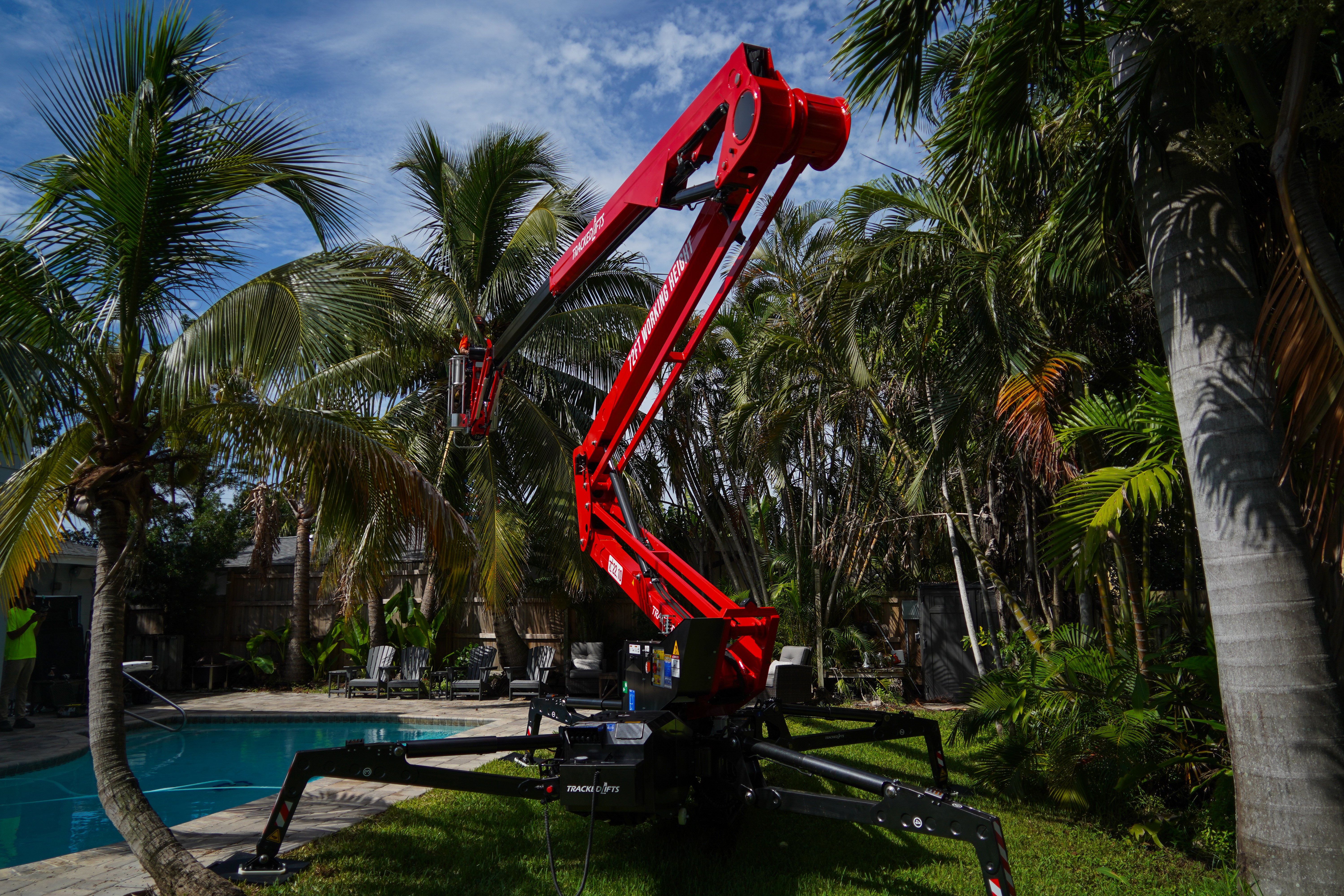
Tracked Lifts designed for arborists include the full Tracked Lifts line, ranging from compact platforms suited to residential work to larger machines for commercial canopy access. The right choice depends on working height requirements, outreach, ground pressure constraints, and transport logistics. Any equipment conversation is worth pairing with a service conversation to make sure the support model matches the operational demand.
Ready To Ask These Questions To a Provider Who Can Answer Them?Talk to a Tracked Lifts specialist about service coverage in your region, what the Arborist Platform includes, and how our model compares to a dealer network. Visit our Service page or call us directly. |