Bucket trucks (also called boom trucks) have been the workhorse of tree work for decades. They show up, they reach high, and they get the job done. But if you've ever watched a crew spend 45 minutes repositioning a bucket truck for a backyard removal, you know they're not the right machine for every situation.
The question isn't whether bucket trucks are useful. They can be. The question is, are they the smartest choice for your business?
When Bucket Trucks Hit Their Limits
Bucket trucks excel on flat, open sites with truck access. Roadside work, commercial properties, and utility jobs. That's their territory. But residential and urban tree work introduces problems that wheeled chassis and truck-mounted lifts weren't designed to solve.
Bucket Truck Access Restrictions
A 36-inch gate, a narrow alleyway, a backyard three properties deep. Good luck getting a bucket truck back there. You're either climbing or passing on the job.
Terrain Challenges and Lack of Level Ground
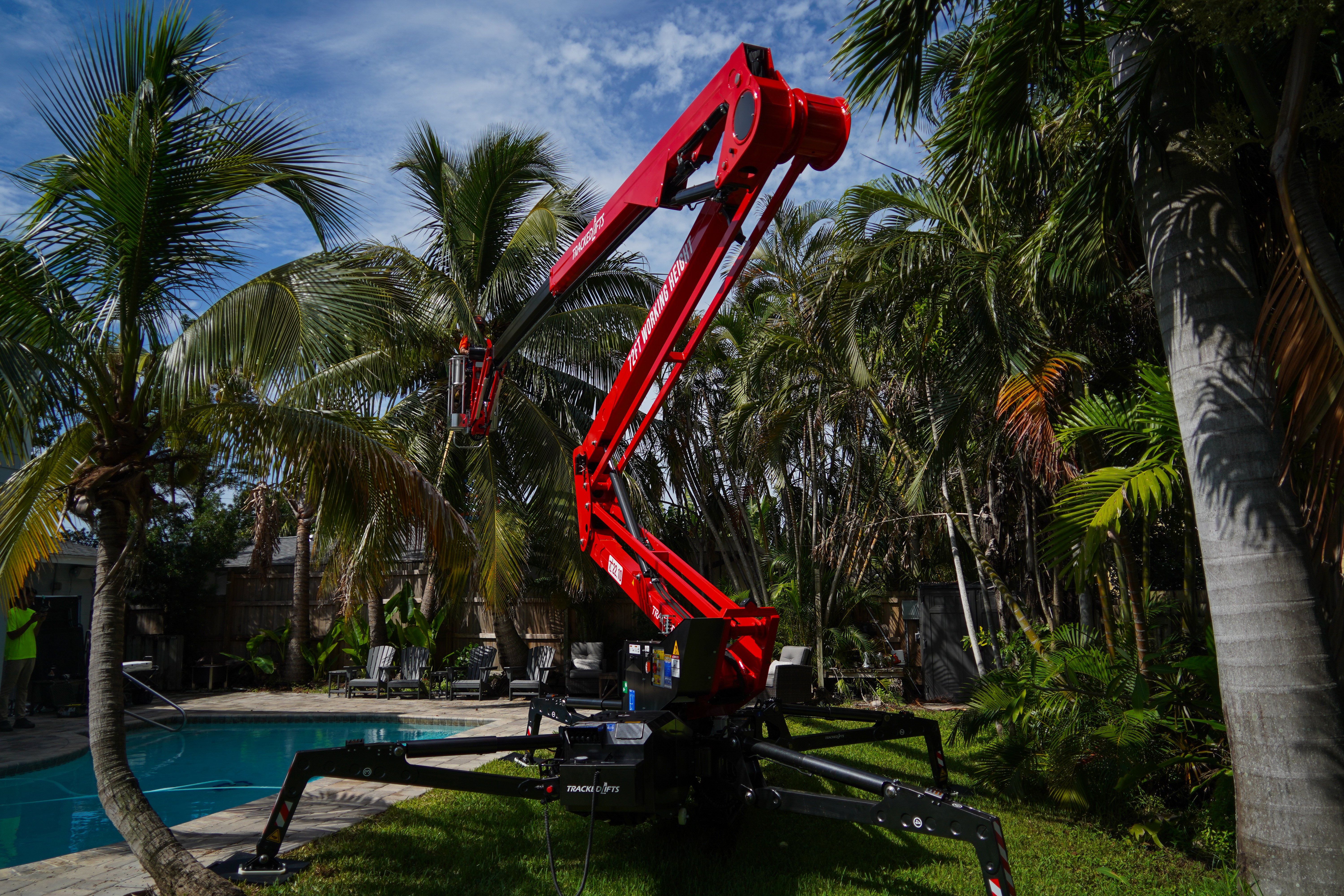
Steep inclines, uneven ground, soft turf after rain. Bucket trucks need level ground and solid staging. Their wheeled chassis and concentrated weight create pressure points that sink into soft surfaces or struggle on slopes. And if you're working on delicate ground like a manicured estate lawn, those wheels are leaving their mark whether you want them to or not.
Repositioning a bucket truck for complex jobs eats hours. Every move requires stabilization, clearance checks, and often a spotter. On intricate residential sites with multiple work zones, that inefficiency adds up fast.
Jobs Where a Spider Lift Clearly Outperforms a Bucket Truck
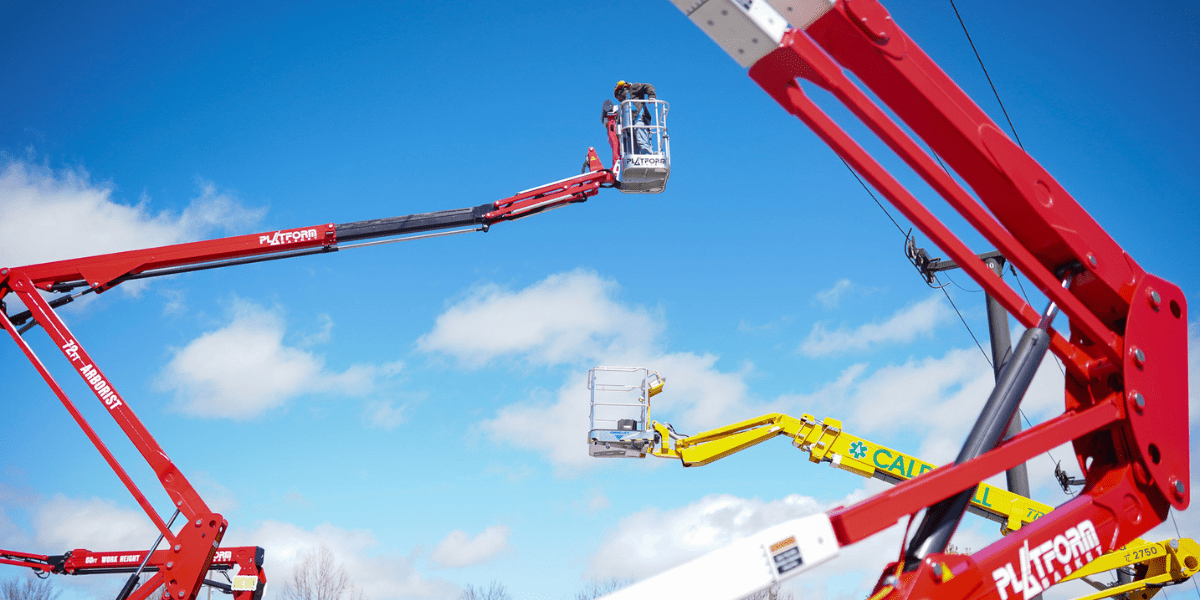
Spider lifts and tracked aerial lifts, in general, change the game entirely. The tracks themselves are the difference. Continuous track systems distribute weight like a tank, which means you can work on terrain that would strand a wheeled machine.
Spider lifts deliver operational advantages bucket trucks can't match:
- Compact footprint for restricted access: fit through standard doors and narrow passages that bucket trucks can't touch
- All-terrain mobility: tracks grip on steep inclines, uneven ground, and soft turf where wheeled chassis struggle
- Superior stability at height: some spider lifts offer little to no swing or sway when you stop the controls; the platform stops and centers immediately
- Faster repositioning: move between work zones without the clearance requirements of bucket trucks
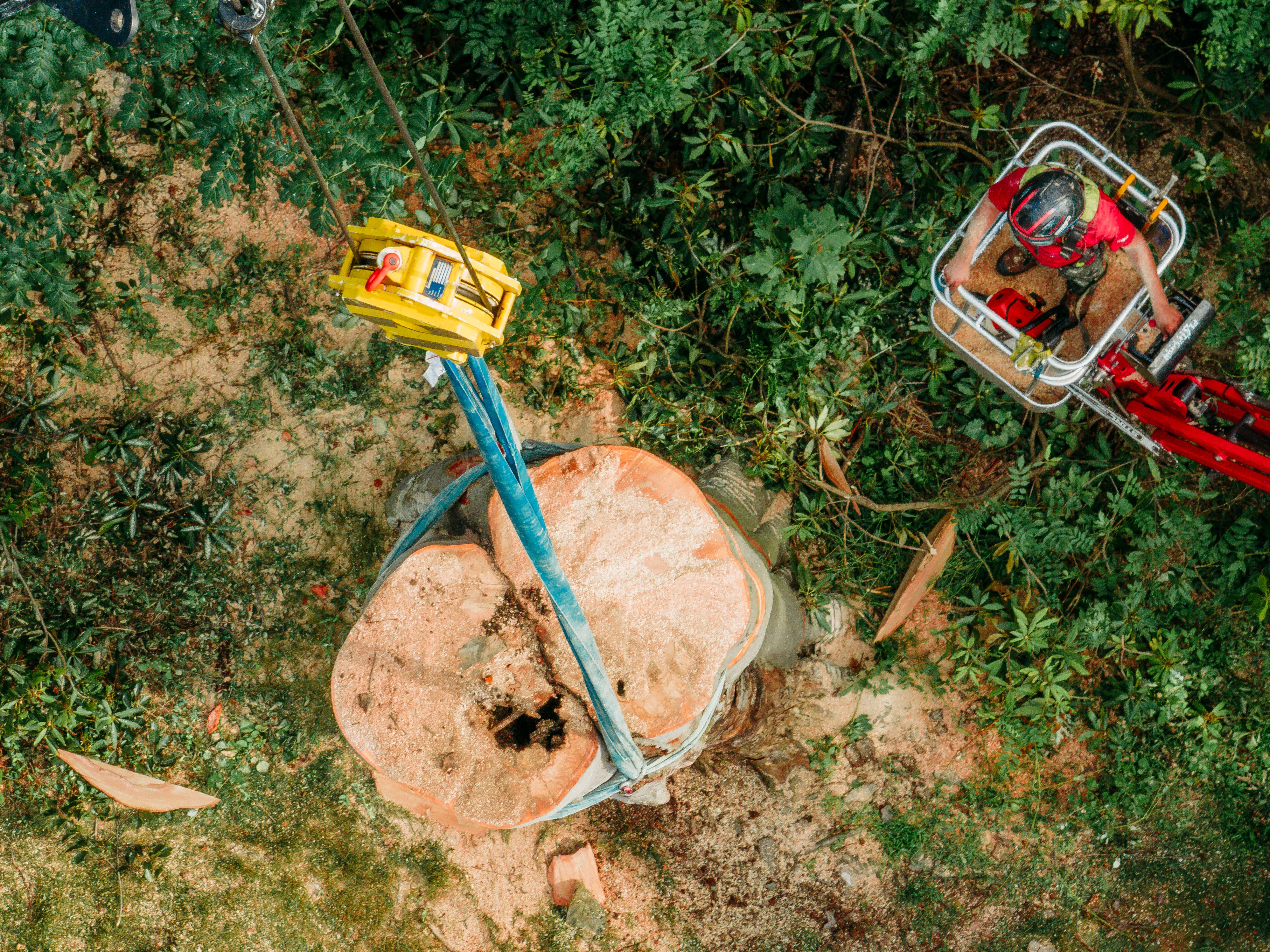
Jobs you used to climb or turn down (backyard removals, gated properties, tight urban sites) become totally doable with the right equipment.
Plus, your clients' lawns stay intact, the salamanders taking a nap in the leaf litter stay undisturbed, and you book jobs your competitors aren’t equipped to handle.
Cost Breakdown: Spider Lift vs. Bucket Truck
The sticker-price conversation is easy: bucket trucks can cost a little less upfront. But the total-cost-of-ownership conversation is more interesting.
Factor in turf repair and job-site remediation costs. Factor in the revenue from jobs you can now access that bucket trucks kept you out of. Factor in fuel efficiency, maintenance intervals, and equipment utilization across your actual job mix, not the ideal scenario where every site has perfect truck access.
Take the whole picture into account, and the best value is clear.
Tracked Lifts are revenue-generating equipment that open job opportunities your current fleet can't handle. Crews justify this when they stop turning down high-margin residential work because of access restrictions.
The Purpose-Built Difference: Spider Lifts for Tree Work
Here's what most people don't realize: the majority of spider lifts on the market started as atrium lifts. They were designed for indoor construction: smooth floors, controlled environments, and glazing work. Companies adapted them for outdoor use and slapped an "Arborist Series" label on them.
You can still see the origins. Exposed hydraulic cylinders. Unprotected gas tanks. Thinner steel construction. They work until they don't, and in harsh arborist environments, "until they don't" comes faster than you'd like.
Purpose-built tracked lifts for arboriculture are a different animal entirely.
Armored undercarriages, protected routing, and heavier steel. Every design decision accounts for debris, logs, and the punishment that tree work dishes out. It's the difference between equipment adapted for your work and equipment designed for it from day one.
When Bucket Trucks Still Make Sense
Let's be clear: bucket trucks aren't obsolete. For roadside utility work, large open commercial sites, and long-duration projects with easy truck access, they can be a practical choice.
The smarter question is whether your job mix justifies relying on them exclusively, or whether Tracked Lifts give you the versatility to say yes to more work.
It isn't an all-or-nothing decision. It's a strategic one based on the jobs you're getting, the jobs you're turning down, and the equipment that matches the sites you work on.
FAQ
Can a Tracked Lift replace a bucket truck for tree work?
For restricted access, residential, and terrain-challenged jobs: absolutely. For open roadside and utility work with truck access, bucket trucks can still be useful. But most crews find Tracked Lifts open up revenue opportunities their bucket trucks couldn't touch.
What jobs are Tracked Lifts better suited for?
Backyard removals, residential estates with delicate ground, urban properties with narrow access, any site with slopes or uneven terrain, and jobs where turf damage creates costly callbacks.
How does stability compare between Tracked Lifts and bucket trucks?
Tracked Lifts minimize swing and sway at height. When you stop the controls, the platform stops and centers rather than continuing to move. The track system also provides superior stability on uneven ground compared to a wheeled chassis with outriggers.
What's the real cost difference over time?
The initial purchase price is only part of the equation. Factor in turf repair costs, revenue from jobs you can now access, fuel efficiency, and equipment utilization across your actual job mix. Tracked lifts often pay for themselves through expanded work capacity.
Which lift is the right machine for my crew's job mix?
If you're doing primarily roadside and open commercial work, bucket trucks are efficient. If you're seeing more residential, urban, and restricted-access jobs (or turning them down because of equipment limitations), tracked lifts solve problems that bucket trucks can't.
Spider Lift Options for Your Kind of Tree Work
Bucket trucks aren't going anywhere. But neither are tight backyards, slope work, or clients who'd really like it if you didn't run over their garden gnome.
Tracked Lifts open up the work you're currently passing on. Simple as that.
Ready to book more jobs and open yourself up to all kinds of new business?
Reach out to Tracked Lifts today. We’re arborist-founded and run. We speak your language, and we’re here to help.